
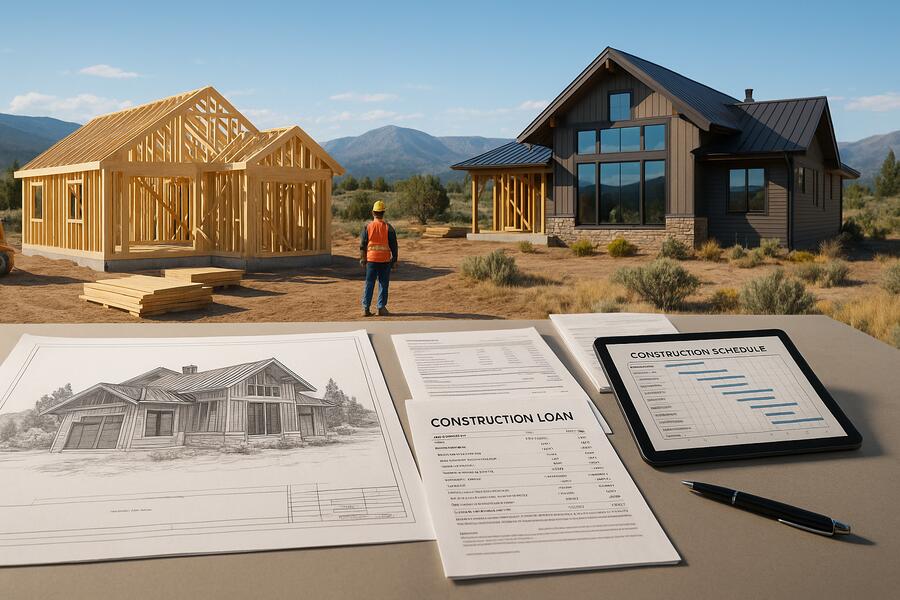
Building a new home from the ground up is an exciting endeavor, offering the unique opportunity to create a living space tailored precisely to your vision. However, financing this dream requires a specialized approach that differs significantly from purchasing an existing home. This is where a “construction loan” comes into play. Unlike a traditional mortgage that disburses the entire loan amount at closing, a construction loan provides funds incrementally as the project progresses. Understanding this step-by-step guide is crucial for aspiring homeowners looking to navigate the complexities of financing a new build, ensuring a smoother journey from blueprint to move-in.
The process involves distinct phases, each with its own financial considerations and lender requirements. From initial planning and securing the land to the final walkthrough, a construction loan acts as a short-term financial bridge. It covers the costs of land, materials, labor, and permits during the build phase, eventually converting or being replaced by a permanent mortgage. For Montana homebuyers considering a construction to permanent loan missoula mt, knowing these steps is essential for effective planning and execution.
Phase 1: Pre-Approval and Planning Your Project
Laying the Groundwork for Your New Home
The initial phase of securing a construction loan is all about meticulous planning and demonstrating financial readiness:
- Define Your Vision & Budget: Before approaching a lender, have a clear idea of your home’s design, size, and features. Get preliminary estimates from builders and architects to establish a realistic budget. Remember that construction loans often require a higher down payment (typically 20-25%) than traditional mortgages due to increased risk.
- Assemble Your Team: You’ll need an experienced and reputable builder. Lenders often have lists of approved builders or require your chosen builder to go through an approval process, including verifying their licenses, insurance, and track record. An architect or home designer may also be part of this early team.
- Secure Your Land: If you don’t already own the land, you’ll need to purchase it. The cost of the land can sometimes be rolled into the construction loan, but this can impact your loan-to-value (LTV) ratio and overall borrowing capacity.
- Construction Plans & Specifications: Detailed blueprints, a comprehensive materials list, and a precise construction timeline are mandatory. These documents are critical for the lender to assess the project’s feasibility and value.
- Obtain Pre-Approval: Similar to a traditional mortgage, getting pre-approved for a construction loan gives you a clear understanding of your borrowing capacity. Lenders will evaluate your credit score, income, debt-to-income (DTI) ratio, and financial reserves, as construction loans typically have stricter qualifying criteria.
💡 Key Takeaway: The first step for a construction loan is extensive pre-planning: define your budget and vision, assemble a reputable builder and architect, secure your land, finalize detailed construction plans, and get pre-approved to understand your borrowing capacity based on stricter qualification criteria.
Phase 2: Loan Application and Underwriting
The Lender’s Due Diligence
This phase involves the formal application and the lender’s comprehensive review of both your financial profile and the construction project itself:
- Formal Application: Submit all required documentation, which includes personal financial statements, income verification, credit history, and detailed project plans.
- Property Appraisal (Future Value): A crucial step is an appraisal based on the *completed value* of the home. The appraiser will review your plans to estimate what the property will be worth once construction is finished. This “as-completed” value is used to determine your maximum loan amount and LTV.
- Underwriting Process: The lender’s underwriters will scrutinize every aspect: your financial stability, the builder’s reputation, and the project’s viability. They’ll ensure all plans comply with local building codes and zoning laws.
- Draw Schedule Establishment: Funds are released in “draws” as construction milestones are met. The lender, in conjunction with your builder, will create a detailed draw schedule. Typical draws might occur at foundation completion, framing, rough-ins (plumbing, electrical, HVAC), exterior completion, and final interior finishes.
- Closing the Construction Loan: Once approved, you’ll sign the closing documents. This short-term loan typically lasts 6-18 months, covering the construction period. During this time, you usually pay only interest on the funds that have been drawn, not on the full loan amount.
Phase 3: Construction and Fund Disbursements
Managing the Build and Draws
With the loan closed, construction can begin, and funds will be released in stages:
- Commencement of Construction: Your builder starts work according to the approved plans and schedule.
- Draw Requests and Inspections: As each milestone on the draw schedule is completed (e.g., foundation poured, framing up), your builder will submit a draw request to the lender. Before releasing funds, the lender will send an inspector to verify that the work has been completed to satisfaction and is in line with the approved plans and budget. This protects both you and the lender.
- Interest-Only Payments: During construction, you will make interest-only payments on the money that has been disbursed. This means your payments will gradually increase as more funds are drawn for the project.
- Contingency Fund Management: It’s common for construction projects to encounter unexpected costs. Lenders often require a contingency fund (typically 10-15% of the construction cost) to cover these unforeseen expenses, ensuring the project doesn’t stall due to lack of funds.
| Phase | Key Steps & Considerations |
|---|---|
| Pre-Approval & Planning | Define budget/vision, select builder, secure land, finalize plans, get pre-approved (high credit/DTI standards, 20-25% down). |
| Loan Application & Underwriting | Submit formal application, ‘as-completed’ appraisal, lender vetting of borrower/builder/plans, draw schedule, close loan. |
| Construction & Disbursements | Builder starts, lender inspections & fund releases (draws) at milestones, borrower pays interest only on drawn funds. Manage contingency. |
| Conversion to Permanent Mortgage | Final inspection, certificate of occupancy, conversion to long-term mortgage (one-time close) or new mortgage application (two-time close). |
💡 Key Takeaway: The construction phase involves the builder executing the plan, with funds disbursed through a meticulously organized draw schedule. Each draw request is followed by a lender inspection to verify work completion, ensuring accountability and adherence to the budget, while you make interest-only payments on the funds drawn.
Phase 4: Transition to Permanent Financing
From Short-Term to Long-Term Homeownership
Once construction is complete, the temporary construction loan must be replaced with a permanent mortgage:
- Final Inspection & Certificate of Occupancy: Before the loan can convert or a new mortgage can be secured, the home must pass a final inspection by the lender’s appraiser and local authorities. You’ll need a Certificate of Occupancy (CO) or equivalent documentation, confirming the home is safe and ready for habitation.
- Two Main Conversion Types:
- Construction-to-Permanent (One-Time Close): This is often the preferred option. You apply and close on both the construction loan and the permanent mortgage at the same time. Once construction is complete and the CO is issued, the loan automatically converts into a standard long-term mortgage (e.g., 30-year fixed) with new terms and amortized payments. This saves on closing costs compared to a two-time close.
- Two-Time Close: Here, the construction loan is a standalone short-term loan. Once construction is complete, you apply for a completely new, permanent mortgage to pay off the construction loan. This means undergoing a second underwriting process and paying a second set of closing costs, but it can offer flexibility to shop for new rates.
- Fixed vs. Adjustable Rates: The permanent mortgage will typically be a fixed-rate loan, though ARMs are also an option, depending on your preferences and market conditions at the time of conversion or new application.
💡 Key Takeaway: The final phase involves transitioning from the temporary construction loan to a permanent mortgage. This can be a seamless one-time close (construction-to-permanent) or a two-time close requiring a separate application. A final inspection and Certificate of Occupancy are crucial before this transition, securing your long-term financing.
Have questions about construction loan? Reach out to our team today.
Frequently Asked Questions About Construction Loans
What is the typical interest rate for a construction loan?
Construction loan interest rates are typically higher than those for traditional mortgages, reflecting the increased risk for lenders during the construction phase. Rates can vary widely but often range from 6.5% to 9.5%+ depending on market conditions, the lender, and your credit profile. Many construction loans have variable rates tied to a benchmark like the prime rate or SOFR.
Do I need perfect credit to get a construction loan?
While “perfect” credit isn’t strictly necessary, you will need very good credit. Lenders typically look for credit scores of 680 or higher, with 720+ being ideal. Strong credit history, a low debt-to-income ratio, and solid financial reserves are all critical for qualifying, as construction loans are considered higher risk.
Can I act as my own general contractor?
It is possible to act as your own general contractor (often called an “owner-builder” or “owner-contractor”) for a construction loan, but this is often more challenging to get approved. Lenders typically prefer to work with experienced, licensed, and insured builders due to the inherent risks. If allowed, you’ll need to demonstrate significant construction experience, have a solid understanding of the building process, and be able to manage subcontractors and project timelines effectively.
What happens if construction goes over budget or schedule?
Going over budget or schedule is a common concern. This is why a contingency fund is so important. If the project exceeds the loan amount, you’ll be responsible for covering the overages, either from personal savings or by seeking additional financing (which can be difficult). Delays can also lead to extended interest-only payments. Clear communication with your builder and lender is vital to manage these situations.
Conclusion
Navigating the “construction loan” process requires a clear, step-by-step understanding, from meticulous planning and securing the right team to managing disbursements and transitioning to permanent financing. While it presents more complexities than a traditional home purchase, a construction loan unlocks the unique opportunity to build a home perfectly suited to your needs and preferences. By diligently preparing your financial profile, partnering with experienced professionals, and adhering to the structured draw schedule and inspection process, you can successfully transform a vacant lot into your custom-built dream home. This specialized financing is an essential tool for those ready to embark on the rewarding journey of new home construction.
