
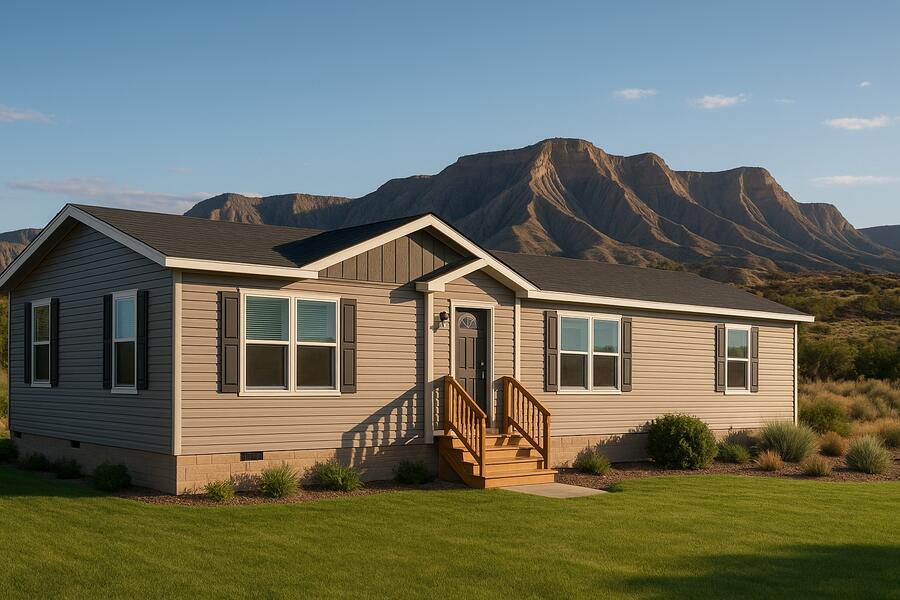
Manufactured homes offer an attractive and often more affordable pathway to homeownership, but securing financing for them can sometimes feel different from traditional site-built homes. Understanding manufactured home loans vs other loan programs: how they compare is crucial for prospective buyers. The key distinction often lies in how the manufactured home is titled—as real property (affixed to land you own) or personal property (like a chattel loan for a home in a leased park). This distinction heavily influences the types of loans available and their associated terms.
While many mainstream mortgage options can apply to manufactured homes, they come with specific requirements that differ from those for conventional site-built houses. These requirements often revolve around the home’s classification, foundation, and adherence to HUD codes. Knowing these differences helps borrowers navigate the lending landscape more effectively and choose the best financing solution for their unique situation, whether they’re considering an fha loan for mobile home missoula mt or another program.
FHA Loans for Manufactured Homes (Title II vs. Title I)
FHA Title II: The Real Property Option
FHA Title II loans are the most common and advantageous option for financing manufactured homes when they are treated as real estate.
- Requirements: To qualify, the manufactured home must be permanently affixed to a foundation on land that the borrower owns. It must also comply with HUD codes (federal safety and construction standards) and be classified as real estate. The manufactured home must be at least 400 square feet.
- Benefits: Similar to FHA loans for site-built homes, Title II offers a low down payment (as low as 3.5% for credit scores 580+) and more flexible credit score requirements compared to conventional loans. It also typically offers competitive interest rates and longer loan terms (up to 30 years).
- Loan Limits: FHA county limits apply, ranging from a floor of $541,288 to a ceiling of $1,249,125 in high-cost areas.
FHA Title I: The Personal Property Option
FHA Title I loans are less common for new purchases but can be useful for specific scenarios.
- Purpose: These loans are primarily used for purchasing a manufactured home that is not permanently affixed to land, or for refinancing existing manufactured home loans. They can also be used for lot purchases and improvements.
- Distinction: Unlike Title II, Title I treats the manufactured home as personal property, similar to a vehicle. This means you don’t necessarily need to own the land it sits on.
- Terms: Loan terms are typically shorter (up to 20 years for a single-wide home and land, up to 25 years for multi-wide with land) and loan limits are lower than Title II. The interest rates may also be slightly higher.
💡 Key Takeaway: FHA Title II loans are for manufactured homes on owned land with a permanent foundation, treated as real property, offering low 3.5% down payments and 30-year terms. FHA Title I loans finance manufactured homes as personal property, often on leased land, with shorter terms (up to 25 years) and lower loan limits.
VA and USDA Loans for Manufactured Homes
VA Loans: Benefits for Veterans
VA loans extend their significant benefits to eligible manufactured homebuyers.
- Eligibility: Available to eligible service members, veterans, and surviving spouses.
- 0% Down Payment: A key advantage is the ability to purchase a manufactured home with no down payment, provided the home is permanently affixed to land the veteran owns and is titled as real estate.
- No Mortgage Insurance: VA loans do not require private mortgage insurance (PMI), which can result in substantial savings. A VA funding fee typically applies, though some veterans are exempt.
- Loan Limits: Veterans with full entitlement generally have no county loan limits, offering greater flexibility in purchasing higher-value properties.
- Requirements: The manufactured home must meet VA minimum property requirements, be on a permanent foundation, and be legally classified as real property.
USDA Loans: Rural Development Support
USDA loans offer an excellent opportunity for low-to-moderate income borrowers in eligible rural areas.
- Eligibility: Must meet specific income limits (typically 115% of the Area Median Income) and the property must be located in a USDA-designated rural area.
- 0% Down Payment: Like VA loans, USDA loans offer 0% down payment, making homeownership accessible for many.
- Requirements: The manufactured home must be new, permanently affixed to a foundation on land the borrower owns, and meet HUD code standards. Resale manufactured homes are generally not eligible unless they were previously financed with a USDA loan.
- Credit Score: Generally requires a minimum credit score of 640.
💡 Key Takeaway: VA loans offer 0% down payment and no mortgage insurance for eligible veterans buying manufactured homes on owned land, with flexible loan limits. USDA loans also provide 0% down for low-to-moderate income borrowers in rural areas, requiring the home to be new, on owned land, and meet specific income and credit score criteria.
Conventional and Chattel Loans
Conventional Loans for Manufactured Homes
Conventional loans are also an option for manufactured homes, primarily through specific programs like Freddie Mac’s CHOICEHome and Fannie Mae’s MH Advantage.
- Requirements: These programs are designed for manufactured homes that are permanently affixed to owned land and meet specific construction and aesthetic standards that make them more comparable to site-built homes. Borrowers typically need good credit (minimum 620-680+).
- Down Payment: Minimum down payments are generally 5-10% for manufactured homes under conventional programs, higher than for site-built homes (which can be as low as 3%).
- Loan Limits: Follow conforming loan limits (e.g., $832,750 for a one-unit property in most areas, higher in high-cost counties).
- Benefits: Offer competitive interest rates and terms up to 30 years for qualified borrowers.
Chattel Loans: Personal Property Financing
Chattel loans are a distinct category, treating the manufactured home as personal property.
- Use Case: These loans are typically used when the manufactured home is located on leased land (e.g., in a manufactured home park) or on land not owned by the borrower.
- Terms: Chattel loans usually have higher interest rates (often 7.50-11.00% or more) and shorter loan terms (often 15-20 years) compared to mortgage-backed loans.
- Down Payment: Down payments are typically 5-10%.
- Pros and Cons: While they offer flexibility for homes on leased land, the higher costs and shorter terms can lead to significantly higher monthly payments. They are generally considered a last resort when other mortgage options aren’t available.
| Loan Type | Min Down Payment | Min Credit Score | Land Required? | Key Advantage |
|---|---|---|---|---|
| FHA Title II | 3.5% | 580+ | Yes (owned) | Low down payment, flexible credit |
| VA Loan | 0% | 580-620+ | Yes (typically owned) | 0% down, no mortgage insurance |
| USDA Loan | 0% | 640+ | Yes (eligible rural area) | 0% down for rural properties |
| Conventional (MH) | 5-10% | 620-680+ | Yes (owned) | Competitive rates for good credit |
| Chattel Loan | 5-10% | 575+ | No (can be leased) | Flexibility for leased land |
💡 Key Takeaway: Conventional loans through programs like CHOICEHome offer competitive rates for manufactured homes on owned land with 5-10% down and good credit. Chattel loans, however, treat manufactured homes as personal property, typically for leased land, resulting in higher interest rates, shorter terms, and larger monthly payments, making them less ideal but an option for specific situations.
Have questions about manufactured home loans vs other loan programs: how they compare? Reach out to our team today.
Frequently Asked Questions About Manufactured Home Loans
What is the most common type of loan for buying a manufactured home with land?
The most common and advantageous type of loan for buying a manufactured home with land is typically an FHA Title II loan. This is because it offers a low down payment (3.5%), flexible credit requirements, and treats the manufactured home as real property once it’s permanently affixed to its foundation on owned land, similar to a traditional site-built home mortgage.
Do manufactured homes always require a larger down payment?
Not always. While some conventional loans for manufactured homes might require a slightly higher down payment (e.g., 5-10%) compared to site-built homes (which can be as low as 3%), other programs offer 0% down. VA loans and USDA loans, for eligible borrowers and properties, allow for no down payment when financing a manufactured home on owned land.
Can I get a loan for a used manufactured home?
Yes, you can get a loan for a used manufactured home, but the options might be more limited than for new ones. FHA Title II loans can be used for existing manufactured homes if they meet HUD codes and FHA appraisal requirements, including being on a permanent foundation on owned land. Conventional loans (like Fannie Mae’s MH Advantage) generally prefer newer homes or those that meet specific aesthetic and construction criteria. Chattel loans are commonly used for used manufactured homes, especially those in leased land parks.
What does “permanently affixed to a permanent foundation” mean?
For a manufactured home to be financed as real property (like with FHA Title II, VA, USDA, or conventional mortgages), it must be permanently affixed to a permanent foundation system. This means the home cannot be easily moved and is tied to the ground in a way that meets specific engineering and local building code requirements, typically involving concrete footings and a proper tie-down system. This ensures the home is considered part of the real estate, not just personal property.
Conclusion
Deciphering manufactured home loans vs other loan programs: how they compare reveals a diverse landscape of financing options, each tailored to specific circumstances. The critical factor often boils down to whether the home is treated as real or personal property. FHA Title II, VA, and USDA loans offer favorable terms for manufactured homes on owned land, with low to no down payments, while conventional programs like CHOICEHome cater to well-qualified borrowers. Chattel loans serve a niche for homes on leased land but come with higher costs. By understanding these distinctions and their associated requirements, prospective manufactured homeowners can make informed decisions, ensuring they secure the most suitable and beneficial financing for their dream home.
