
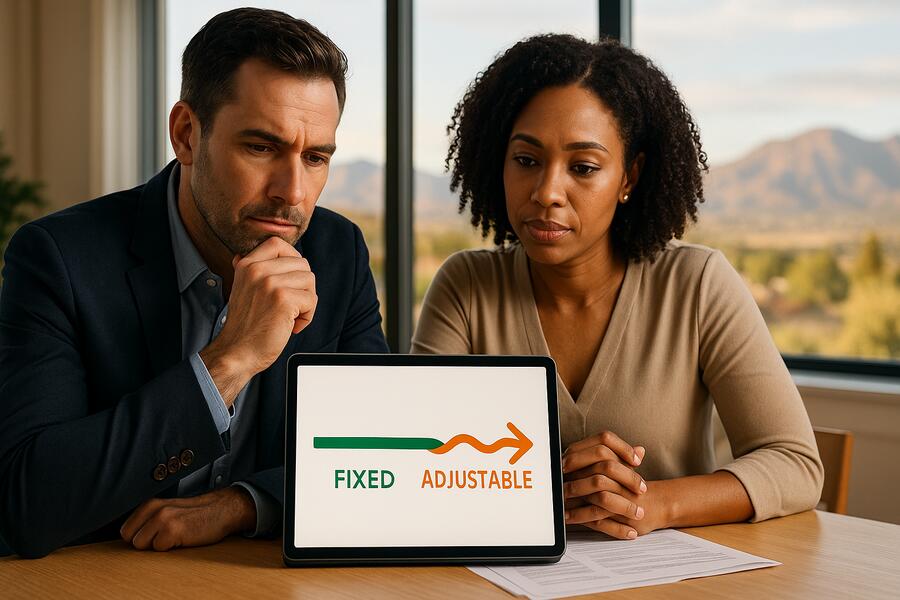
Choosing the right mortgage can feel like navigating a complex maze, especially when faced with the decision between a fixed-rate and an adjustable-rate mortgage (ARM). Each option comes with its own set of advantages and potential drawbacks, impacting your monthly payments, long-term financial stability, and overall cost of homeownership. Understanding “fixed vs adjustable rate mortgages: how they compare” is fundamental for any homebuyer looking to make an informed choice that aligns with their financial goals and risk tolerance. It’s not about one being inherently superior, but rather which product best suits your specific circumstances and future plans.
This comparison will break down the mechanics of both fixed and adjustable-rate mortgages, examining factors like interest rate stability, initial costs, payment predictability, and suitability for different homeownership horizons. By the end, you’ll have a clearer picture of which mortgage type might be the best fit for your next home purchase. For expert guidance in navigating these options, a trusted mortgage broker missoula mt can provide personalized advice.
Fixed-Rate Mortgages: Stability and Predictability
Understanding the Long-Term Security
A fixed-rate mortgage is a cornerstone of traditional home financing, primarily chosen for its stability:
- Consistent Interest Rate: The most defining feature of a fixed-rate mortgage is that its interest rate remains the same for the entire life of the loan. Whether you opt for a 30-year, 20-year, or 15-year term, your interest rate is locked in at closing and will not change.
- Predictable Monthly Payments: With a fixed interest rate, your principal and interest portion of the monthly mortgage payment will always be the same. This predictability simplifies budgeting and financial planning, as you know exactly what to expect each month, regardless of market fluctuations.
- Ideal for Long-Term Homeownership: Fixed-rate mortgages are generally recommended for homebuyers who plan to stay in their homes for an extended period, typically 7-10 years or more. This allows them to benefit from the consistent payment without concern for rate increases.
- Protection Against Rising Rates: In an environment where interest rates are expected to rise, a fixed-rate mortgage offers significant protection. You secure a rate today that won’t increase even if market rates climb significantly in the future.
Adjustable-Rate Mortgages (ARMs): Initial Savings, Future Variability
Navigating the Shifting Interest Landscape
ARMs, on the other hand, offer a different value proposition, often appealing to those with specific short-to-medium term plans:
- Lower Initial Interest Rate: ARMs typically start with an initial interest rate that is lower than comparable fixed-rate mortgages. This introductory period can last for 3, 5, 7, or 10 years (e.g., a 5/1 ARM means the rate is fixed for 5 years, then adjusts annually).
- Initial Payment Savings: Due to the lower introductory rate, monthly payments during the fixed-rate period of an ARM are often lower than those of a 30-year fixed mortgage. This can free up cash flow for other investments or expenses.
- Rate Adjustments: After the initial fixed period, the interest rate adjusts periodically (e.g., annually for a 5/1 ARM or semi-annually for a 5/6 ARM), based on a specified market index (like SOFR) plus a fixed margin set by the lender.
- Potential for Higher Payments: The main risk of an ARM is that your interest rate and, consequently, your monthly payments can increase significantly after the fixed period, especially in a rising interest rate environment. ARMs usually have caps on how much the rate can increase per adjustment period and over the life of the loan, but payments can still climb considerably.
- Best for Shorter Horizons: ARMs are often suitable for homebuyers who plan to sell or refinance their home before the fixed-rate period ends. They are also an option for those who anticipate their income will increase substantially in the future, allowing them to absorb potential payment hikes.
💡 Key Takeaway: Fixed-rate mortgages offer predictable monthly payments and long-term security with a constant interest rate, ideal for those planning to stay in their home for many years. Adjustable-rate mortgages (ARMs) provide lower initial interest rates and payments, appealing to those who expect to sell or refinance before the fixed period ends, but come with the risk of future payment increases.
Key Comparison Points: Which is Right for You?
Assessing Your Personal Financial Situation
To decide between a fixed-rate and an ARM, consider these factors:
- Interest Rate Environment:
- Rising Rates: A fixed-rate mortgage is generally safer.
- Falling Rates: An ARM might offer initial savings, with the potential to refinance later.
- Length of Stay in Home:
- Long-Term (7+ years): Fixed-rate offers stability.
- Short-Term (under 7 years): An ARM might provide significant initial savings if you plan to move or refinance before the rate adjusts.
- Risk Tolerance:
- Low Risk: Fixed-rate offers certainty.
- High Risk: An ARM might appeal if you’re comfortable with potential payment changes.
- Future Income Projections:
- Stable/Predictable Income: Fixed-rate payments are easy to budget.
- Anticipated Income Growth: An ARM might be manageable if you expect higher earnings to offset potential rate increases.
| Feature / Metric | Fixed-Rate Mortgage | Adjustable-Rate Mortgage (ARM) |
|---|---|---|
| Interest Rate | Stays the same for the entire loan term. | Fixed for an initial period (e.g., 3, 5, 7, 10 years), then adjusts periodically. |
| Monthly Payment | Predictable and stable. | Lower initially, but can increase or decrease after the fixed period. |
| Payment Predictability | High. Easy to budget. | Lower after fixed period. Requires more budgeting flexibility. |
| Risk Level | Low, protected from rising rates. | Higher, risk of payment increases. Rate caps provide some protection. |
| Best For | Long-term homeowners, those who value stability and budgeting certainty. | Short-term homeowners, those expecting to sell/refinance, or anticipating significant income growth. |
💡 Key Takeaway: The choice between fixed and ARM hinges on your personal financial situation, risk tolerance, and how long you plan to stay in the home. Fixed rates are best for long-term stability and those averse to risk, while ARMs offer initial savings for shorter-term plans or those comfortable with future rate variability.
Have questions about fixed vs adjustable rate mortgages how they compare? Reach out to our team today.
Frequently Asked Questions About Fixed vs. Adjustable Rate Mortgages
What is the “index” and “margin” in an ARM?
After the initial fixed period, an ARM’s rate is determined by an index plus a margin. The “index” is a market-driven interest rate that fluctuates (e.g., SOFR). The “margin” is a fixed percentage added to the index by your lender. Your new interest rate equals the index rate plus the margin. The margin never changes over the life of the loan.
Are there caps on how high an ARM can go?
Yes, ARMs typically have three types of caps:
- Initial Adjustment Cap: Limits how much the interest rate can increase during the first adjustment period after the fixed rate expires.
- Periodic Adjustment Cap: Limits how much the rate can change during subsequent adjustment periods.
- Lifetime Cap: Sets the maximum interest rate that can be charged over the entire life of the loan.
These caps protect borrowers from unlimited rate increases, but payments can still rise significantly.
When is a 15-year fixed mortgage a good option?
A 15-year fixed mortgage allows you to pay off your home faster, often with a lower interest rate than a 30-year fixed. While monthly payments are higher, you pay significantly less interest over the life of the loan. It’s a great option for those who can comfortably afford the higher payments and want to build equity quickly.
Can I refinance an ARM to a fixed-rate mortgage?
Yes, many homeowners with ARMs choose to refinance into a fixed-rate mortgage, especially as their fixed period is about to expire or if interest rates have fallen. This allows them to lock in a stable rate and avoid potential payment increases. Refinancing depends on market rates at the time, your creditworthiness, and your equity.
Conclusion
The choice between “fixed vs adjustable rate mortgages: how they compare” boils down to a fundamental trade-off between predictability and initial savings. Fixed-rate mortgages offer unparalleled stability, ensuring consistent payments and peace of mind for long-term homeowners. Conversely, adjustable-rate mortgages present a lower initial cost, appealing to those with shorter time horizons or a higher tolerance for financial variability. By carefully assessing your future plans, risk appetite, and current market conditions, you can make a strategic decision that aligns with your financial well-being and homeownership goals. Consulting with a mortgage professional can provide tailored insights to help you confidently navigate this important choice.
