
Mortgage Broker in Great Falls, MT

You have probably already noticed that Great Falls does not behave like the rest of Montana’s housing market. While Bozeman and Kalispell have priced out a generation of local buyers, the median home in Great Falls sold for about $339,715 in mid-2026, and homes are sitting for roughly 52 days rather than disappearing over a weekend. That combination, real affordability plus enough time to think, is rare in this state right now. Montana Mortgage Company compares loan options from multiple lenders so you see real rates and real terms side by side, not whatever a single bank happens to offer that week.

Multiple Lenders Compared, Not One Bank·Purchase & Refinance Across All Price Points·FHA, VA, USDA, Conventional, Renovation, Construction
Local & Direct

You call Scott, not a queue

Full Loan Menu

FHA, VA, USDA & more

From Start to Close

No rotating representatives

Montana Owned & Based

Statewide service

Great Falls Montana homebuyers reviewing mortgage options with a local broker

The Great Falls Market

Why Getting a Mortgage in Great Falls Is More Complicated Than It Looks

Affordability is not the same thing as simplicity. Great Falls is one of the few Montana markets where the FHA loan limit, $541,287 in Cascade County for 2026, sits far above the median sale price. In practical terms that means FHA financing reaches essentially the entire local market, which is not true in Flathead or Gallatin County. So the question is rarely whether you can get FHA here. It is whether you should, and that answer turns on mortgage insurance, your credit profile, and how long you plan to stay.

The second thing that makes Great Falls distinctive is Malmstrom Air Force Base. The base is the economic anchor of the city and the region, which means a meaningful share of buyers here are active-duty, recently separated, or veterans. VA financing offers zero down payment and no monthly mortgage insurance, which on a $340,000 purchase is a materially different monthly payment than an FHA loan on the same house. But VA loans also carry a funding fee, occupancy requirements, and a Certificate of Eligibility step that trips up buyers who start late. If you are arriving on orders, sequencing your pre-approval against your report date is the single most important thing to get right.

Third, Great Falls has older housing stock in many of its established neighborhoods. A house that appraises fine and a house that passes an FHA or VA appraisal are not always the same house. Peeling paint on a pre-1978 home, a roof near the end of its life, or a non-functioning furnace can stop a government-backed loan cold. That is not a reason to avoid those loans. It is a reason to know before you write the offer, so you can either negotiate repairs or move to a renovation product that finances the fix.

Loan Options

Great Falls Home Loan Options Matched to Your Situation

Great Falls affordability, a large military and veteran population, older housing in the established neighborhoods, and genuine rural eligibility just outside the city limits mean the right loan program is rarely obvious from the outside. Buyers arrive with different combinations of income, savings, service history, and property targets, and matching those variables to the right product is where the financing work actually happens.

For Great Falls buyers who have not had years to accumulate a down payment, FHA financing opens the door with as little as 3.5% down for borrowers at 580 or above. What makes Great Falls unusual is the headroom: the Cascade County FHA limit is $541,287 for 2026 against a median sale price near $339,715, so the limit reaches essentially the entire local market. That is not true in Gallatin or Flathead County. The honest trade-off is mortgage insurance, which stays for the life of the loan in most cases unless you refinance out of it later, so it is worth planning that exit from day one.
Buyers with stronger credit and a larger down payment often find conventional financing is the better long-term answer, particularly because private mortgage insurance falls off at 20% equity rather than persisting. For a Great Falls buyer with a score above 700, a 3% or 5% down conventional loan frequently beats FHA on total cost even when the rate looks similar on paper. Running both side by side, with honest monthly and lifetime numbers, is the comparison that decides it.
VA financing matters more in Great Falls than almost anywhere else in Montana. Malmstrom Air Force Base anchors the local economy, which means a meaningful share of buyers here are active-duty, recently separated, or veterans. VA offers zero down payment and no monthly mortgage insurance, backed by the Department of Veterans Affairs, and on a $340,000 purchase that is a materially different payment than FHA on the same house. Montana also administers a state Veterans Home Loan Program that can layer benefits on top of federal eligibility. The Certificate of Eligibility step is where people lose time, so start it early.
USDA-backed financing offers 100% financing with no down payment in eligible rural areas, and much of Cascade County outside the Great Falls city limits qualifies. Buyers looking at Black Eagle, Belt, Cascade, Vaughn or the surrounding agricultural areas should check specific addresses early, because eligibility is drawn at the property level and the maps do not always match intuition. Household income limits also apply relative to area median income.
For Great Falls homeowners aged 62 or older, a Home Equity Conversion Mortgage converts accumulated equity into accessible funds without a monthly mortgage payment. The counseling requirement built into the HECM process ensures borrowers understand the obligations that do remain, including property taxes, insurance and maintenance. It is a specialized product with real trade-offs, and it is worth comparing honestly against a cash-out refinance or simply downsizing before committing.
The refinance decision comes down to a specific calculation: how much the new rate lowers the payment, what closing costs total, and how long you will stay before the break-even point passes. A rate-and-term refinance, a cash-out refinance for equity access, and a program change each serve different goals and carry different costs. Not every refinance makes sense, and I will tell you when yours does not.
Great Falls is one of the better markets in Montana for first-time buyer assistance, because Montana Housing programs carry purchase price caps that local prices sit comfortably beneath. The Regular Bond Loan Program provides below-market rates. Bond Advantage and the MBOH Plus 0% deferred second address the down payment gap directly. The Mortgage Credit Certificate converts a portion of annual mortgage interest into a dollar-for-dollar federal tax credit for as long as you hold the loan. Income caps apply to each, and rates and limits change, so the numbers need checking against current published figures.
Buyers who cannot find the right existing home are increasingly looking at building. A construction loan covers costs during the build through a draw schedule tied to project milestones, then converts to permanent financing at completion without a second closing and a second set of costs. Documentation requirements are more involved than a standard purchase, including builder contracts, timelines and detailed cost breakdowns, and rate lock length against a shifting build schedule is where buyers most often get caught out.
Manufactured homes are a real and underused path in Cascade County. FHA Title II, conventional financing with appropriate foundation certification, and USDA in eligible areas each handle manufactured housing differently. The first question that determines which programs apply is whether the home sits on owned land or a leased lot, followed by foundation type, whether the title has been retired, and the age of the unit. Clarifying that early prevents weeks spent pursuing a loan type that was never going to work.
Pre-approval means full income and asset verification, a credit review, and a lender commitment to a specific amount subject to appraisal. Pre-qualification is an estimate based on self-reported numbers. At 52 days on market you have more room than a Bozeman buyer, but the well-maintained homes still draw competing offers, and sellers notice which document you bring to the table.
Given the age of much of the housing stock in central Great Falls, renovation lending deserves more attention than most buyers here give it. A renovation loan wraps the purchase price and the cost of planned improvements into a single mortgage, underwritten against the value of the home after the work is done. That changes what is possible on a house that would otherwise fail a standard FHA or VA appraisal.
Fannie Mae’s HomeStyle is the conventional path for financing improvements alongside a purchase. It is available on primary residences and second homes, covers a wide range of improvement types from cosmetic updates through structural work, and allows scope that FHA’s rehab program will not. Contractor approval and a draw process tied to construction progress are part of the structure.
The FHA 203(k) combines the purchase and the renovation into one FHA mortgage at the same 3.5% down. The Limited 203(k) handles smaller cosmetic work up to a defined threshold. The Standard 203(k) covers structural and major rehabilitation. On a Great Falls home with an aging roof, outdated electrical, or peeling paint on a pre-1978 property that would block a standard FHA appraisal, the 203(k) is frequently the difference between a dead deal and a closed one.
Eligible veterans and service members who find a Great Falls property that needs work before it meets their needs, or before it passes VA minimum property requirements, have a renovation path available. The VA renovation loan combines acquisition and rehabilitation costs with no down payment requirement, preserving the core VA advantage even when the home is not move-in ready. Very few lenders offer it, so it is worth asking about by name.
Freddie Mac’s CHOICERenovation is the conventional counterpart to the 203(k), and it explicitly includes resilience improvements such as roofing, structural reinforcement and energy efficiency upgrades. For a Great Falls buyer financing improvements as part of a purchase or refinance, comparing CHOICERenovation against HomeStyle comes down to the specific property and project scope.

Neighborhoods

Great Falls Neighborhoods and What Buyers There Are Navigating

Great Falls is not one market. What works financing-wise near the base does not necessarily work on the historic west side, and buyers who understand that walk in with realistic expectations rather than a surprise at the appraisal.
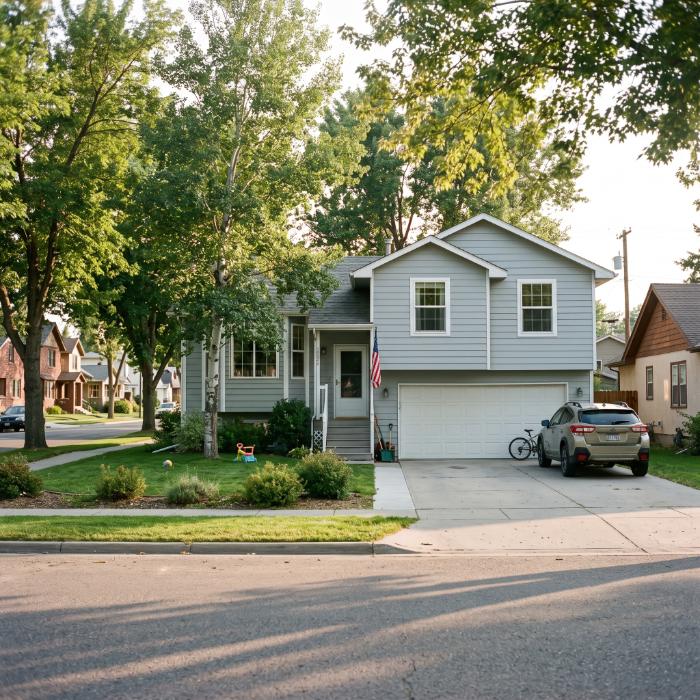
Buyers in the corridors closest to the base are disproportionately military, and VA financing is usually the strongest option on the board. Zero down and no monthly mortgage insurance change the entry math completely in a market at this price point.

The considerations that come up most are timing a pre-approval against PCS orders, understanding VA occupancy requirements if reassignment is a realistic possibility, and deciding whether to buy at all rather than rent for a first tour. That last question deserves a straight answer rather than a sales pitch. If you are likely to be here three or more years, buying often makes sense at Great Falls prices. On a short tour, the transaction costs of buying and selling inside two years can outweigh the equity you build.

Starting the Certificate of Eligibility early is the single most practical thing a Malmstrom buyer can do, because it is the step that most often delays a closing when it is left until the file is already under contract.

The established neighborhoods closer to the historic core hold much of the city’s character housing, and much of it predates 1978. That single fact drives most of the financing conversation in this part of town.

Any FHA or VA appraisal on a pre-1978 home brings lead-based paint requirements into play, and homes of this vintage routinely surface roofing near the end of its life, original electrical, or heating systems that will not pass. A conventional appraisal is more forgiving, though not unlimited. Buyers who fall for a character home here and then discover the loan will not close on it in current condition have usually skipped a fifteen-minute conversation.

The practical answer is often a renovation product rather than a different house. An FHA 203(k) or a HomeStyle loan finances the repairs into the mortgage, which means the condition that would have killed the deal becomes part of the plan instead. Knowing that before you write the offer also changes your negotiating position on price and repairs.

Newer construction, fewer appraisal surprises, and generally straightforward financing. Buyers in these areas are more often solving a math problem than an eligibility problem.

The typical conversation here is comparing a low down payment conventional loan against FHA on total monthly cost, factoring in how mortgage insurance is treated under each. With Cascade County’s FHA limit sitting far above local prices, both programs are genuinely available to most buyers, which makes this a decision about long-term cost rather than qualification.

For buyers relocating from out of state, particularly those arriving through Malmstrom, these neighborhoods tend to offer the most predictable path from offer to closing, which matters when a report date is fixed.

Outside the city limits, USDA eligibility becomes a live question, and it is the most commonly missed opportunity in the Great Falls market. Zero down financing is genuinely available on properties a short drive from town, for buyers who assumed they needed at least 3.5%.

Eligibility is address-specific rather than town-specific, so two properties on the same road can differ. Check before you write an offer rather than after. Household income limits also apply relative to area median income, and they are a real constraint worth confirming rather than assuming.

Properties in these areas frequently carry well and septic systems, which introduce inspection requirements that city buyers do not face. Those are manageable, but they add steps and time to a closing, and they occasionally surface repair conditions of their own.

Montana home representing the statewide service area a Great Falls mortgage broker covers for buyers and homeowners

Regional Coverage

Serving Great Falls and Statewide Montana

Montana Mortgage Company works with buyers and homeowners across the state, not just inside Great Falls city limits. If your search extends into Black Eagle, Belt, Cascade or the surrounding Cascade County communities, if you are relocating to or from another Montana market, or if you own a second property elsewhere in the state, one broker relationship handles all of it. I also serve Missoula, Billings and Bozeman. The multi-lender comparison approach does not change based on where the property sits: real rates and real terms from multiple lending partners so you can decide with the full picture in front of you.

Frequently Asked Questions About Mortgages in Great Falls

The thresholds are the same here as anywhere in Montana. Conventional loans generally look for a score above 620, FHA can work down to 580 with 3.5% down, and VA and USDA set no federal minimum though most lenders want to see 580 to 620. What is different in Great Falls is that lower prices mean a weaker score costs you less in absolute dollars than it would in Kalispell or Bozeman. That is a real advantage, but it does not make the score irrelevant. If yours is sitting just under a threshold, a short delay to move it up can pay for itself.
It depends on your tour length, your orders, and whether you would be comfortable holding the property if you are reassigned. VA financing makes the entry cost close to zero, which tempts people into buying without thinking through the exit. If you are likely to be here three or more years, buying often makes sense in a market at this price point. If you are on a short tour, the transaction costs of buying and selling inside two years can outweigh the equity you build. I will run those numbers with you honestly rather than talking you into a loan.
Yes, more so than almost anywhere else in Montana. The Cascade County FHA limit is $541,287 for 2026 against a median sale price near $339,715, so the limit is not the constraint. The constraint is property condition. FHA appraisals flag peeling paint on pre-1978 homes, roofs near end of life, and non-working mechanical systems. On the older housing stock in central Great Falls, that comes up regularly. When it does, an FHA 203(k) renovation loan often solves what a standard FHA loan cannot.
For 2026 the conforming loan limit in Cascade County is $832,750, the same baseline that applies statewide. Given local prices, very few Great Falls buyers approach it. Practically, jumbo financing is a non-issue in this market, which is one of the ways buying here is simpler than in Flathead or Gallatin County.
More Great Falls buyers qualify than in Montana’s expensive markets, because Montana Housing programs carry both income and purchase price limits and local prices sit comfortably under the purchase price caps. The Regular Bond Loan Program, MBOH Plus, Bond Advantage down payment assistance and the Mortgage Credit Certificate are all worth checking. First-time generally means you have not owned a home in the past three years, with exceptions for veterans and certain target areas. Program rates and limits change, so I check your numbers against the current published figures before you plan around any of them.
Plan on 30 to 45 days from application, assuming your documentation comes in promptly and the appraisal goes smoothly. Appraiser availability in Cascade County is generally better than in the high-volume western Montana markets, which helps. The things that stretch a Great Falls timeline are usually property condition issues surfacing at the appraisal on an older home, and VA loans where the Certificate of Eligibility was not started early. Both are avoidable with a conversation up front.
I am based in Missoula and licensed across Montana, so Great Falls and the rest of Cascade County get the same direct line, the same loan programs, and the same person handling the file start to finish. There is no branch handoff and no rotating cast of representatives. Most of my clients outside Missoula handle everything by phone, email and video, and I am reachable in the evenings and on weekends during an active home search, which is usually when the questions come up.

Next Step

See Real Rates from Multiple Lenders on Your Great Falls Loan

Whether you are buying your first home in Great Falls, using your VA benefit for the first time from Malmstrom, looking at an older home on the west side that needs work, or refinancing what you already own, the first step is a straightforward conversation. One application, multiple lenders compared side by side, rates and fees explained in plain language. Reach out through the form below, or call (406) 880-5155 directly, and let us look at what actually fits your situation.

Licensing & Disclosures

Montana Mortgage Company is the personal brand of Scott Lucier, a licensed mortgage loan originator. Loans are originated through loanDepot.com, LLC (NMLS ID #174457), an Equal Housing Lender. Scott Lucier is licensed to originate mortgage loans in Montana and North Dakota. NMLS ID: 1637174. This is not a commitment to lend. All loans are subject to credit approval, underwriting guidelines, and program availability. Equal Housing Opportunity.