
Mortgage Broker in Bozeman, MT

You’ve been watching Bozeman listings for weeks. You know the neighborhoods, you have a sense of what you can spend, and you’re starting to wonder whether the financing piece is actually going to come together. Median home prices in Bozeman have climbed well past $700,000, and in the most competitive segments, properties don’t wait for buyers who show up unprepared. Montana Mortgage Company compares loan options from multiple lenders so you see real rates and real terms side by side, not whatever a single bank happens to offer that week.

Multiple Lenders Compared, Not One Bank
·Purchase & Refinance Across All Price Points
·FHA, VA, USDA, Conventional, Renovation, Construction
Local & Direct

You call Scott, not a queue

Full Loan Menu

FHA, VA, USDA & more

From Start to Close

No rotating representatives

Montana Owned & Based

Statewide service

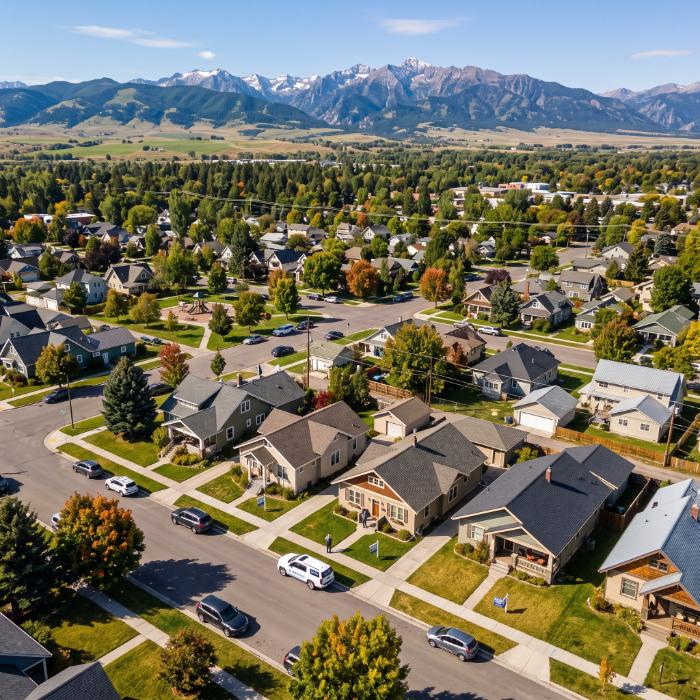
Bozeman Montana residential street with the Bridger Mountains visible in the background illustrating the local housing market a mortgage broker helps buyers navigate

The Bozeman Market

Why Getting a Mortgage in Bozeman Is More Complicated Than It Looks

Bozeman’s housing market has been one of the fastest-appreciating in the country over the past five years. Median sale prices now sit well above $700,000, and even the lower end of the market rarely stays available long enough for buyers to casually shop lenders after finding a property they want. The gap between what median household income can comfortably support and what median housing actually costs in Bozeman has widened significantly, which means the specific loan program a buyer uses, including the down payment requirement, rate, and mortgage insurance structure, shows up directly in their monthly payment in ways that genuinely matter.

Bozeman’s property mix creates financing complexity that a one-size-fits-all bank product doesn’t address well. Single-family detached homes, newer construction in developing corridors, condominiums, townhomes, and manufactured homes on owned lots each point toward different loan products. A veteran buying in a rural-adjacent area faces a different lending landscape than a first-time buyer targeting a condo downtown. Buyers who approach this market with only one lender’s offer have no way to know whether a different program structure would lower their payment, reduce their out-of-pocket costs at closing, or simply get them across the qualification threshold at all. That comparison is what a broker provides.

Loan Options

Bozeman Home Loan Options Matched to Your Situation

Bozeman’s mix of price points, property types, outdoor-oriented workforce, active veteran population, and rural-adjacent geography means the right loan program is rarely obvious from the outside. Buyers arrive with different combinations of income, savings, service history, and property targets, and matching those variables to the right product is where the financing work actually happens.

For Bozeman buyers who haven’t had years to accumulate a large down payment, FHA financing opens the door with as little as 3.5% down for borrowers with credit scores at 580 or above. The credit standards are more forgiving than conventional alternatives, and statewide loan limits are structured to accommodate most Bozeman-area price points. The honest trade-off is mortgage insurance premium (MIP), which stays for the life of the loan in most cases unless the borrower refinances out of it later. That future refinance is worth planning for from day one, particularly if the buyer expects their equity position to strengthen as Bozeman values continue to hold.

Buyers with stronger credit profiles and larger down payments often find conventional financing is the right fit, particularly in Bozeman’s mid-to-upper price segments where avoiding lifetime mortgage insurance matters to the long-term cost picture. Conventional loans serve the move-up buyer and the buyer targeting properties in the $600,000 to $800,000 range, where loan size relative to conforming limits becomes a factor worth examining carefully. Private mortgage insurance on a conventional loan can be structured to fall off once the borrower reaches 20% equity, which changes the long-term payment math compared to FHA.

Bozeman has a meaningful veteran population, and for eligible veterans, active-duty servicemembers, and qualifying surviving spouses, VA financing offers zero down payment and no private mortgage insurance, backed by the Department of Veterans Affairs. Those two features together represent a significant structural advantage in a high-price market where down payment accumulation is one of the biggest barriers to entry. Montana also administers a state Veterans’ Home Loan Program that can layer additional rate benefits on top of federal VA eligibility. Navigating the Certificate of Eligibility process and pairing state and federal benefits correctly is something the broker handles directly.

USDA-backed financing is not available within Bozeman’s core city limits, but buyers whose search extends to rural-designated communities within a reasonable commute often qualify. The USDA definition of “rural” is broader than most buyers expect, and 100% financing with no down payment requirement makes this a meaningful option for the right property and buyer combination. Income limits apply and are based on household size relative to area median income. Checking a specific property address against the USDA eligibility map early in the search process is worth doing, particularly for buyers who are open to properties outside the immediate Bozeman urban core.

Bozeman homeowners aged 62 or older who purchased years ago are sitting on substantial equity in a market that has appreciated dramatically. A Home Equity Conversion Mortgage (HECM) converts that equity into accessible funds without requiring a monthly mortgage payment, which can meaningfully change the financial picture for a homeowner on a fixed income. The counseling requirement built into the HECM process ensures borrowers understand the obligations that do remain, including property taxes, homeowner’s insurance, and maintenance. Eligibility is tied to age, property type, and the homeowner’s current mortgage balance relative to the home’s value.

For Bozeman homeowners, the refinance decision comes down to a specific calculation: how much does the new rate lower the monthly payment, what do closing costs total, and how long will the homeowner stay in the property before that break-even point passes. A rate-and-term refinance, a cash-out refinance for equity access, and a program change each serve different goals and carry different cost structures. Homeowners who purchased before Bozeman’s most recent appreciation cycle may find that a cash-out refinance is a realistic option even if a rate-and-term refinance doesn’t pencil out given current market rates.

First-time buyers in Bozeman have access to a layered set of programs that can meaningfully reduce the barrier to entry, but understanding which programs stack together and whether a specific property and income combination qualifies requires someone who works these applications regularly. Montana Housing’s Regular Bond Loan Program provides below-market rates for qualifying buyers. Bond Advantage and the MBOH Plus 0% deferred second mortgage address the down payment gap directly. The Montana Mortgage Credit Certificate (MCC) converts a portion of annual mortgage interest into a dollar-for-dollar federal tax credit, which reduces the buyer’s tax liability for as long as they hold the loan. Income caps and purchase price limits apply to each program, and fitting a Bozeman property within those caps is a real constraint worth verifying early.

Bozeman’s ongoing development activity, particularly in corridors where new residential construction is actively expanding, means some buyers are financing a build rather than an existing property. A construction loan covers the costs during the build phase through a draw schedule tied to project milestones, then either converts to permanent financing or is replaced by a standard mortgage at completion. The documentation requirements for a construction loan are more involved than a standard purchase loan, including builder contracts, project timelines, and detailed cost breakdowns, and working with a broker who understands both the construction phase and the permanent financing transition matters.

Manufactured homes represent a realistic price point for buyers in the Bozeman area, and the financing options available depend significantly on whether the home sits on owned land and whether it meets the foundation and titling standards required by different loan programs. FHA Title II, conventional financing with appropriate foundation certification, and USDA in eligible areas each handle manufactured housing differently. The land-lease versus owned-lot distinction is the first question that determines which programs apply, and buyers who don’t clarify this early can lose time pursuing loan types that won’t work for their specific property.

In Bozeman’s most active price bands, showing up at an offer table with a pre-qualification estimate rather than a verified pre-approval letter is a competitive disadvantage that sellers notice. Pre-approval involves full income and asset verification, a credit review, and a lender commitment to a specific loan amount, subject to property appraisal. Pre-qualification is an estimate based on self-reported numbers. In a market where desirable properties can receive multiple offers quickly, the difference between those two documents is the difference between a seller taking the offer seriously or not.

Not every buyer is targeting new construction. Bozeman’s established neighborhoods contain a meaningful share of older housing stock where the purchase price may be more accessible but the property needs updating before it meets the buyer’s expectations or, in some cases, minimum habitability standards. A renovation loan wraps the purchase price and the cost of planned improvements into a single mortgage, so the buyer isn’t scrambling to fund a kitchen renovation or roof replacement out of pocket in the months after closing. The scope of work the buyer plans determines which renovation loan product fits, and that conversation is worth having before the offer goes in.

Fannie Mae’s HomeStyle product is the conventional path for buyers who want to finance improvements alongside a purchase but who either don’t qualify for or don’t prefer FHA-backed alternatives. HomeStyle is available on primary residences and second homes, covers a wide range of improvement types from cosmetic updates to structural work, and is well-suited to buyers targeting Bozeman properties that sit above FHA loan thresholds. Contractor approval and a fund disbursement process tied to construction progress are part of the structure, and the broker helps buyers understand those mechanics before the project starts.

The FHA 203(k) is the government-backed renovation option for buyers who want the lower down payment structure of FHA combined with the ability to finance repairs. The Limited 203(k) handles smaller cosmetic improvements up to a defined dollar threshold. The Standard 203(k) covers structural and major rehabilitation work where the property requires more significant investment. For a first-time buyer in Bozeman targeting a property in an established neighborhood that needs real work, the Standard 203(k) can be the financing path that makes an otherwise unworkable purchase viable.

Eligible Bozeman veterans who find a property they want but that needs work before it meets their needs, or before it passes VA minimum property requirements, have a renovation financing path available. VA renovation loans combine acquisition and rehabilitation costs without a down payment requirement, which preserves the fundamental VA advantage even when the property isn’t move-in ready. The scope of allowable improvements and the documentation requirements are specific to this program, and understanding how VA minimum property requirements interact with the renovation scope is important early in the process.

Freddie Mac’s CHOICERenovation product offers another conventional renovation path, one that explicitly includes resilience-related improvements like roofing, structural reinforcement, and energy efficiency upgrades. For Bozeman homeowners in an area where weather and environmental conditions matter to long-term property durability, the ability to finance those improvements alongside a purchase or as part of a refinance is a practical feature. LTV limits and eligible project types apply, and comparing CHOICERenovation against the HomeStyle alternative is part of the loan matching conversation based on the buyer’s specific property and project scope.

Neighborhoods

Bozeman Neighborhoods and What Buyers There Are Navigating

Bozeman’s neighborhoods don’t just differ in feel and price. They create different financing conversations. Older urban neighborhoods raise renovation loan questions. Newer development corridors raise construction and conventional financing questions. Areas near the city’s edges raise USDA eligibility and program limit questions. Understanding the lending landscape of a specific neighborhood before making an offer is part of showing up prepared.
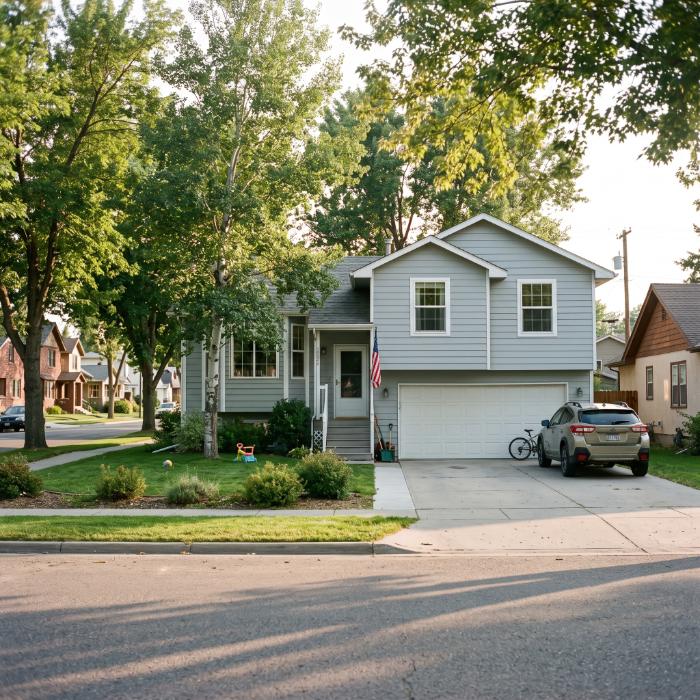
The blocks surrounding Montana State University carry consistent demand from faculty, staff, graduate students, and long-term Bozeman residents who value walkable access to campus and the surrounding amenities. The housing stock here tends toward older construction, including bungalows and mid-century homes that have character but also carry deferred maintenance histories that show up on inspection reports.

A buyer targeting this area needs to think about two things at once: financing the purchase in a segment where demand stays relatively stable, and potentially financing improvements if the property’s condition creates negotiation points or habitability questions. Renovation loan programs, including the FHA 203(k) and HomeStyle, are worth understanding before an offer goes in, because the ability to wrap improvement costs into the mortgage rather than funding them out of pocket after closing changes the buyer’s financial flexibility significantly.

The University District also rewards pre-approval discipline. Because demand from the university community is persistent, homes that are priced well and located on the better blocks don’t accumulate time on market. A buyer without a verified approval letter is at a structural disadvantage when competing with someone who can demonstrate financing readiness. First-time buyers targeting this area should also verify whether the specific property and their income fall within program caps for Montana Housing assistance, since some properties in the district may sit near or above the limits that those programs impose. Working through that eligibility check before falling in love with a specific address saves time and prevents last-minute financing pivots.

Downtown Bozeman and the historic blocks surrounding Main Street represent some of the most sought-after addresses in the city. The pedestrian scale, the concentration of restaurants and retailers along Main Street, and the proximity to community events throughout the year make this area a consistent target for buyers who want to live within walking distance of what makes Bozeman culturally distinctive.

Properties here span a wide range, from renovated historic commercial conversions to older single-family homes and newer condo developments that have filled in vacant blocks over the past decade. The condo and townhome inventory in and around downtown introduces financing questions that purely single-family areas don’t face, including HOA financial health review requirements and, in some cases, FHA or VA project approval requirements that apply to the entire building rather than just the unit.

Buyers targeting downtown condominiums should verify early whether a specific building is on the FHA or VA approved project list, because that determination affects which loan programs are available. A building that doesn’t carry those approvals isn’t necessarily off-limits, but it narrows the financing options to conventional lending, which changes the down payment and qualification picture. For buyers with strong credit and a solid down payment, that narrowing may not matter. For a first-time buyer relying on FHA financing, it changes the property selection conversation entirely. This is exactly the kind of project-level detail that matters before an offer is written, not after.

The northwest quadrant of Bozeman, including the Baxter Meadows area and surrounding development corridors, represents some of the city’s newer residential construction. Planned communities with HOAs, larger lot sizes relative to the urban core, and homes built over the past two decades give buyers in this part of the city a different experience than shopping the historic neighborhoods closer to downtown or campus.

Buyers here are more likely to be looking at move-up purchases or new construction opportunities, and the financing conversations shift accordingly. Conventional financing with a meaningful down payment is typically the primary path in price ranges where first-time buyer program caps may not reach. Construction loans become relevant for buyers who want to build on available lots in corridors where new development is still active, and navigating the transition from construction financing to permanent financing requires understanding how the draw schedule, builder timeline, and final appraisal interact.

The more suburban character of northwest Bozeman also means buyers with the right income profile and family situation may want to model the monthly payment difference between a conventional loan structure and a program with lower down payment requirements, even if they technically qualify for conventional financing. Seeing those scenarios side by side, with honest cost projections, is the comparison a broker provides. For buyers entering this area from out of state who are unfamiliar with the local development landscape, having a lending partner who understands which corridors are still actively permitted and which have stabilized matters when construction loan timelines are part of the picture.

The east side of Bozeman, including neighborhoods like Legends at Bridger Creek and the residential areas stretching toward the Bridger Mountain foothills, attracts buyers drawn by proximity to trail access, views of the Bridgers, and a somewhat quieter residential character than the commercial energy closer to downtown. Properties in this corridor tend to sit at higher price points given the view premiums and the quality of more recent construction, and the buyer pool skews toward households with strong income profiles and meaningful down payment capacity.

For this segment, conventional financing is typically the primary conversation, and the question becomes how to structure the down payment and loan size to optimize the rate and avoid unnecessary costs. In a price range where loan amounts can approach or exceed conforming limits, understanding the threshold between conforming conventional and jumbo financing matters because it affects both the rate and the qualification standards. A buyer whose loan amount sits just above the conforming limit may find that a slightly larger down payment brings them back into conforming territory with meaningfully better pricing.

Buyers in this area who are also exploring whether any properties in the eastern corridors approaching the rural fringe carry USDA eligibility should check specific addresses early. While much of developed east Bozeman sits within city-limit boundaries that preclude USDA financing, properties in adjacent unincorporated areas sometimes qualify, and for a buyer comparing options across a range of properties, this can be important.

Map of Bozeman Montana and the surrounding Gallatin Valley showing the broader service area a local mortgage broker covers for buyers and investors

Regional Coverage

Serving Bozeman and Statewide Montana

Montana Mortgage Company works with buyers and homeowners across the state, not just inside Bozeman city limits. If your search extends into the surrounding Gallatin Valley, if you own a second property in another Montana market, or if you’re comparing Bozeman against other Montana metros as you plan a move, one broker relationship handles all of it. The multi-lender comparison approach doesn’t change based on where the property sits — the goal is the same everywhere: real rates and real terms from multiple lending partners so you can decide with the full picture in front of you.

Frequently Asked Questions About Mortgages in Bozeman

The thresholds are the same here as anywhere in Montana. Conventional loans generally look for a score above 620, FHA can work down to 580 with 3.5% down, and VA and USDA set no federal minimum though most lenders want to see 580 to 620. What changes in Bozeman is the loan size. On a larger balance, the pricing difference between a 680 and a 740 adds up to real money over the life of the loan, more than it would on a smaller mortgage elsewhere in the state. If your score is sitting just under a threshold, it is worth a conversation before you start shopping.

For 2026, the conforming loan limit in Gallatin County is $832,750, the same baseline that applies to every Montana county. Borrow above that and you are in jumbo territory, which means different underwriting, typically a larger down payment, tighter reserve requirements, and fewer lenders competing for the loan. Bozeman buyers run into that line far more often than buyers in the rest of Montana, simply because prices here are higher. If you are shopping anywhere near that number, structure the financing before you write an offer, not after.

FHA works better in Gallatin County than in most of Montana. The 2026 FHA limit here is $718,750, well above the $541,287 floor that applies across most of the state, because HUD sets county limits off local median prices and Bozeman’s are high. That covers a meaningful share of what is on the market. The trade-off is mortgage insurance, which on FHA sticks for the life of the loan in most cases. I will run that against a low down payment conventional option side by side so you can see the real monthly and long-term cost of each, rather than just which one is easiest to get approved.

Montana Housing runs several worth looking at: the Regular Bond Loan Program for below-market rates, MBOH Plus and Bond Advantage for down payment assistance, the 80% Combined program, and a Mortgage Credit Certificate that converts part of your mortgage interest into an annual federal tax credit. Every one of them carries income and purchase price limits set county by county, and Gallatin’s limits are higher than most of Montana’s, which helps here. First-time generally means you have not owned a home in the past three years, with exceptions for veterans and certain target areas. Rates and limits change, so I check your numbers against the current published figures before you plan around any of them.

Yes, and this catches more buyers in Bozeman than almost anywhere else in Montana. With FHA and VA, the project itself has to be approved, not just you. Conventional financing requires a project review that looks at the HOA budget, reserve funding, owner-occupancy ratio, insurance, and any pending litigation. A newer development still under the builder’s control, or one with heavy short-term rental use, can come back non-warrantable, which narrows your options to portfolio lenders and changes your terms. Send me the address as early as you can. Finding this out before you are under contract is a much better experience than finding out during underwriting.

Plan on 30 to 45 days from application, assuming your documentation comes in promptly and the appraisal goes smoothly. Two things stretch that timeline here more than elsewhere: appraiser availability across the Gallatin Valley during the busy months, and condo or townhome project reviews, which add a step that single-family purchases skip entirely. New construction runs on its own schedule and needs a rate lock strategy built around the completion date. I will give you a realistic closing date rather than an optimistic one, because your offer and your move depend on it being right.

Yes. A construction to permanent loan funds the build and then converts into your permanent mortgage without a second closing and a second round of costs. Given how much of the inventory around Bozeman and Belgrade is new, this comes up constantly. The parts that matter are your builder’s documentation and licensing, the draw schedule, and how long your interest rate can be locked against a build timeline that may shift. That last piece is where people get caught out, so we work it through before you commit, not halfway into the build.

I am based in Missoula and licensed across Montana, so Bozeman and the rest of Gallatin County get the same direct line, the same loan programs, and the same person handling the file start to finish. There is no Bozeman branch handoff and no rotating cast of representatives. Most of my Gallatin County clients prefer to handle everything by phone, email, and video anyway, and I am reachable in the evenings and on weekends during an active home search, which is usually when the questions actually come up.

Next Step

See Real Rates from Multiple Lenders on Your Bozeman Loan

Whether you’re a first-time buyer targeting a University District bungalow, a move-up buyer looking at Baxter Meadows, a veteran considering a home in the Bridger foothills, or a homeowner weighing a refinance or renovation loan, the first step is a straightforward conversation. One application, multiple lenders compared side by side, rates and fees explained in plain language. Reach out through the form below, or call (406) 880-5155 directly, and let’s look at what actually fits your situation.

Licensing & Disclosures

Montana Mortgage Company is the personal brand of Scott Lucier, a licensed mortgage loan originator. Loans are originated through loanDepot.com, LLC (NMLS ID #174457), an Equal Housing Lender. Scott Lucier is licensed to originate mortgage loans in Montana and North Dakota. NMLS ID: 1637174. This is not a commitment to lend. All loans are subject to credit approval, underwriting guidelines, and program availability. Equal Housing Opportunity.