
Mortgage Broker in Billings, MT

Buying a home in Billings right now means navigating a market that looks more affordable than coastal cities on paper but still puts real pressure on local incomes. Median single-family home prices in Billings have climbed steadily, and buyers who walk into a single bank expecting a straightforward pre-approval often find themselves surprised by what comes back. The first offer from one institution is rarely the best offer available. A locally based mortgage broker who understands Billings’ neighborhood price dynamics, Montana’s state and local assistance programs, and the seasonal rhythms of this market is a fundamentally different resource than a national call center reading from a script.

Locally Based Montana Mortgage Brokerage
·Multiple Lending Partners Compared
·FHA, VA, USDA, Conventional, Renovation & More
Local & Direct

You call Scott, not a queue

Full Loan Menu

FHA, VA, USDA & more

From Start to Close

No rotating representatives

Montana Owned & Based

Statewide service

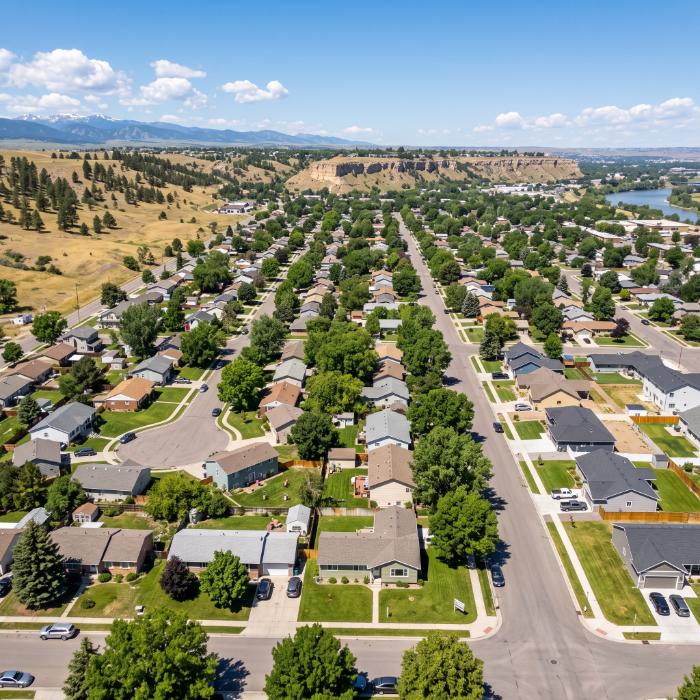
Aerial view of a Billings Montana residential neighborhood illustrating the local housing market a mortgage broker helps buyers navigate

The Billings Market

Why Getting a Mortgage in Billings Is Harder Than It Looks

Billings is Montana’s largest city, and its housing market reflects that status. Median home prices have risen meaningfully over the past four years, outpacing wage growth for many of the healthcare workers, educators, energy sector employees, and small business owners who make up the bulk of the local buyer pool. The gap between what a household earns and what a lender will approve is not always obvious until a buyer is already emotionally invested in a property.

Picture a St. Vincent Healthcare nurse or a Billings Clinic employee who has spent two years saving a down payment, finally feeling ready. They sit down with a stack of pay stubs and a W-2 and receive a pre-approval letter from their bank that comes back below what they need to compete in the Heights or the West End. Meanwhile, a property they had been watching goes under contract to a buyer who arrived with a full pre-approval and a loan structure already matched to the purchase price.

The supply side compounds this. Billings has limited housing inventory at the entry-level and mid-range price points where most first-time buyers are competing. When inventory is tight and sellers can be selective, pre-approval quality and loan program selection stop being paperwork steps and become competitive variables. Buyers who do not understand which programs they qualify for, or who are working with a single lender who cannot compare alternatives, often find themselves on the losing end of that competition.

The core value of a broker in a market like Billings is simple: one application, multiple lenders, and loan scenarios presented side by side so the buyer can actually compare. What that means in practice varies by borrower.

A remote worker who relocated to Billings from a higher-cost region may carry a complex income picture, contract work, multiple income streams, or a self-employment history that some institutions handle poorly. A first-time buyer in the Heights might be trying to layer Montana Housing down payment assistance onto an FHA loan, which requires a lender who participates in the state program and a broker who knows which combinations are permitted. A homeowner who bought in 2020 or 2021 at historically low rates is asking a different question: whether any refinance path makes sense as rates have shifted, or whether accessing equity without replacing the entire mortgage is a better answer.

In each of these situations, working with a single bank means getting one institution’s best offer, with no way to know whether a different lender, a different product, or a different loan structure would save thousands of dollars over the life of the loan. Montana Mortgage Company was built around the opposite approach: compare first, then commit. The buyer sees the full picture before making a decision, with rates and fees explained in plain language rather than buried in paperwork.

Loan Options

Mortgage and Refinance Services for Billings Homebuyers

Homeownership in Billings rarely follows a single path. A first-time buyer in the Northside needs a different loan structure than a veteran purchasing in the West End, and a homeowner sitting on equity from a decade ago faces a different set of options than someone who bought last year. What follows covers the full range of situations Billings buyers and homeowners actually face, from the first purchase to a future renovation or rate adjustment.

For a Billings buyer with steady employment but a modest down payment, perhaps a newer healthcare professional or a teacher entering the market for the first time, FHA financing opens doors that conventional programs close. The lower down payment threshold and more flexible credit evaluation make FHA a workable path in a market where purchase prices have climbed above what many buyers can match with 20 percent down. The mortgage insurance trade-off is real and worth understanding in detail: in a market where equity appreciation has been positive but uneven, knowing how long mortgage insurance stays on the loan and when it can be removed matters to the long-term cost calculation.

The buyer who has built a solid credit profile and arrives with a meaningful down payment, often someone who sold a home elsewhere and brought equity to Billings, or a dual-income household that has saved aggressively, is well positioned for conventional financing. Avoiding private mortgage insurance changes the monthly payment picture substantially when the purchase price is already above the state median. Conventional loans also offer more flexibility on property types and fewer restrictions on condition compared to government-backed programs, which matters in a market where Billings’ older neighborhoods include homes that government appraisers sometimes flag.

Billings has a meaningful veteran and active-duty population, and the VA loan benefit remains one of the most powerful tools available to eligible buyers in this market. Zero down payment, no private mortgage insurance, and competitive rates combine to make VA financing the right first conversation for any veteran approaching the Billings market. The Montana Veterans Home Loan program adds a state-level rate benefit on top of the federal VA backing, making the combination particularly effective for buyers stretching toward Billings’ current median price. VA loan terms and lender fees vary significantly across institutions, which is exactly where the broker comparison approach produces a measurable result.

Billings’ urban core is not eligible for USDA financing, but areas in the surrounding rural and semi-rural zones outside the dense city limits carry USDA-eligible designations that make zero-down financing possible for buyers whose household income falls within program limits. A buyer priced out of the Heights or the West End who is open to properties in eligible outlying areas may find that USDA financing changes the math entirely. Knowing where the eligibility boundaries fall, and which properties qualify, requires someone who works these scenarios regularly rather than a buyer trying to interpret the eligibility map alone.

A Billings homeowner who purchased decades ago, perhaps in Lockwood or the Northside when prices were a fraction of today’s levels, may be sitting on substantial equity with no practical way to access it on a fixed retirement income. A reverse mortgage converts that equity into usable funds without creating a monthly payment obligation, which matters significantly for a retiree whose Social Security and pension income covers living expenses but not major costs like healthcare or home repairs. The age requirement applies, and the origination fee structure varies enough across institutions that a broker comparison protects this borrower class from paying more than necessary for the same product.

Two distinct groups of Billings homeowners are asking about refinancing right now. The first bought in 2020 or 2021 at historically low rates and is not interested in replacing that rate under any circumstances. The second bought in 2023 or 2024 at higher rates and is watching the rate environment closely, wondering when the break-even calculation tips in their favor. For the second group, the math is straightforward in concept but requires real numbers: closing costs on a refinance need to be recovered through monthly savings before the move pays off, and that timeline varies based on loan balance, rate differential, and how long the homeowner plans to stay. A broker who can shop multiple refinance products surfaces better terms than a single lender can offer, and honest break-even analysis, not sales pressure, is the right framework for this conversation.

The landscape for first-time buyers in Billings includes several programs that, when stacked correctly, can meaningfully reduce the upfront cash required to close. Montana Housing’s Regular Bond Loan Program offers below-market rates for qualifying buyers. The Bond Advantage program provides up to $15,000 toward down payment and closing costs. These state programs layer onto FHA or VA base loans when the lender participates in the state programs, which not every institution does. Eligibility requirements, purchase price caps, and income limits vary by program and change periodically, making a broker who works with these programs regularly the right guide through the combinations that actually work in Billings’ current price environment.

A buyer who cannot find an existing home in Billings that meets their needs, or who has found a lot and wants to build, faces a different financing structure than a standard purchase. Construction loans operate in two phases: a draw period during which funds are released as work is completed, followed by a conversion to a permanent mortgage at the end of construction. Rates and terms on construction-to-permanent loans vary meaningfully across lenders, and the comparison a broker provides at this stage can produce outcomes that diverge by thousands of dollars over the life of the loan. Billings’ expanding residential footprint in the southwest and the Heights creates real opportunity for buyers willing to build.

With site-built single-family medians well above what many Billings buyers can support, manufactured homes represent a genuine path to ownership for a segment of the market. The financing is more nuanced than conventional purchase loans: not all loan products apply to manufactured homes, FHA and VA programs have specific requirements around foundation certification and titling, and conventional programs through certain investors have their own eligibility criteria. Finding the right lender for a manufactured home purchase in Montana requires knowing which institutions actively serve this property type, which is not a universal capability.

In Billings neighborhoods where desirable properties at competitive prices still attract multiple offers, the strength of a pre-approval letter is part of offer evaluation. A seller’s agent reviewing two offers at similar prices is going to look at the quality of the financing behind each. A pre-qualification estimate based on self-reported income is a different document than a full pre-approval where income, assets, and credit have been reviewed and documented. The latter is what a Billings seller actually wants to see, and the difference between the two is often the difference between an accepted offer and a counteroffer that goes to another buyer. The timeline from document submission to pre-approval is typically within one business day when documentation is complete.

A buyer looking at entry-level inventory in Billings often finds that available homes in that price range carry deferred maintenance, dated systems, or cosmetic conditions that make them hard to compete for conventionally. Buying a property at a lower price and financing the renovation in the same loan can be a more efficient path than paying full price for a move-in-ready home. Renovation loans are the vehicle that makes this possible, and the right product depends on the buyer’s credit profile, down payment situation, the scope of the planned work, and the property type. A broker comparison at this stage ensures the buyer lands on the product that fits their specific situation rather than the one a single lender happens to offer.

The Fannie Mae HomeStyle renovation loan is a conventional option for the Billings buyer with a solid credit profile who wants to renovate a property that may not meet FHA condition standards, including mixed-use buildings near downtown, older commercial-residential combinations, or craftsman homes where the renovation scope is substantial. HomeStyle permits improvements beyond what the FHA 203k program allows, including luxury upgrades and certain structural changes, which gives buyers targeting Billings’ older neighborhoods flexibility that the government-backed renovation path does not provide.

For the first-time buyer in Billings who is working with a lower down payment and targeting the more affordable end of the market, the FHA 203k renovation loan provides a government-backed path to buying a property that needs work. The limited 203k handles smaller cosmetic projects with a streamlined process. The standard 203k addresses more extensive structural rehabilitation. Billings’ older residential neighborhoods contain housing stock that is exactly the use case this product was designed for: properties priced below the market median because of condition, available to buyers who can see past the deferred maintenance to the value underneath.

A Billings veteran who finds a well-priced property that needs repair work faces a specific challenge: VA appraisals flag deferred maintenance as conditions that must be addressed before closing, which can kill a deal if the seller is unwilling to make repairs. A VA renovation loan combines the zero-down purchase benefit with financing for repairs or upgrades, removing that barrier by building the repair cost into the loan rather than making it a pre-closing condition. In a Billings market where well-priced properties at the affordable end often carry visible deferred maintenance, this product is more relevant than many buyers realize.

The Freddie Mac ChoiceRenovation loan provides a conventional renovation option with flexibility across a wider range of property types than most renovation products, including manufactured homes on permanent foundations. For the Billings buyer approaching the market from the more affordable end of the spectrum, or for an investor who wants renovation financing on a property type that other programs exclude, ChoiceRenovation fills a gap that neither HomeStyle nor FHA 203k covers in every situation.

Neighborhoods

Buying a Home Across Billings’ Neighborhoods

Billings’ neighborhoods are not interchangeable from a lending standpoint. A craftsman in the Northside carries different appraisal dynamics than a new construction home in the West End. A Heights property on a larger lot presents a different buyer profile than a downtown condo or a Lockwood home just beyond the city limits. Understanding which neighborhoods draw which buyer profiles, and how pricing behaves differently across Billings’ geography, is part of structuring the right loan from the beginning.
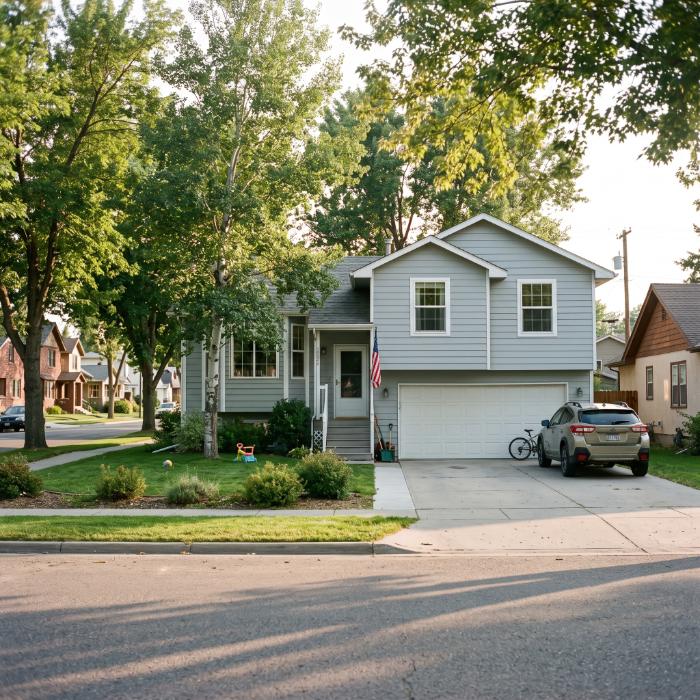
The Heights

The Heights is where a significant share of Billings’ family-oriented buying activity concentrates. Newer construction single-family homes, larger lots, proximity to schools, and a suburban residential character attract buyers who want more space than the older core neighborhoods provide. Purchase prices in the Heights reflect newer construction premiums in many pockets, which means conventional financing is the typical path for buyers with documented income and a meaningful down payment. First-time buyers in the Heights who are working with state assistance programs will want to confirm purchase price caps align with the neighborhood’s current median, as the program income and price limits can create friction when prices have moved.

Downtown Billings and the Northside

Downtown Billings and the Northside contain the city’s oldest residential stock, with bungalows, ranches, and smaller homes that represent the most affordable entry points in the city’s established neighborhoods. This is where first-time buyers, FHA borrowers, and buyers working with Montana Housing assistance programs are most active, because entry-level prices still exist in a meaningful way. The older housing stock creates renovation loan conversations regularly: a buyer who can look at a dated bungalow and see the value underneath, rather than the deferred maintenance on the surface, often finds that the Northside delivers more square footage per dollar than any other part of the city. Pre-approval speed matters here because inventory at this price point turns quickly.

West End

The West End draws buyers who want established residential character with convenient access to Billings’ major retail corridors, healthcare campuses, and employment centers. Homes here tend to be mid-century through 1990s construction on established lots, with pricing that sits in the middle of Billings’ range. The buyer profile is broad: dual-income households, healthcare professionals, and buyers relocating from elsewhere who want a neighborhood with mature trees and proximity to daily conveniences. Conventional financing is common at the West End’s price points, though FHA remains an option for buyers with strong income but limited cash for a full conventional down payment. Renovation loan conversations come up when buyers find a well-located property with a dated kitchen or aging mechanical systems.

Lockwood

Lockwood sits just east of Billings proper, and its position outside the city limits creates a different lending environment worth understanding before a buyer falls in love with a property there. USDA eligibility is a question worth checking for Lockwood properties, as some areas in the surrounding zone carry eligible designations that make zero-down financing possible for qualifying buyers. Property types in Lockwood tend toward larger lots and single-family homes with a semi-rural character, which attracts buyers who want space and a quieter setting while staying within a short drive of Billings’ employment base. Buyers considering Lockwood alongside in-city options benefit from a broker who can model both scenarios and show the financing implications of each.

Map of Billings Montana and the surrounding region showing the broader service area a local mortgage broker covers for buyers and investors

Regional Coverage

Regional Coverage for Billings-Area Buyers

Many Billings buyers and homeowners have situations that extend beyond the city limits. A property investor managing multiple units across Billings and surrounding communities, a buyer comparing in-city properties against outlying options, or a homeowner with a vacation property in a nearby area often needs a single broker relationship that can handle all of it rather than starting over with a new lender for each transaction.

The team works with clients whose portfolios and searches span the broader service area, including surrounding communities, nearby towns, and outlying rural properties throughout the region. If your situation involves properties beyond Billings proper, the conversation is worth having. A single point of contact who understands your full financial picture produces better loan outcomes than a fragmented approach with a different lender for each address.

Frequently Asked Questions About Mortgages in Billings

Montana Housing’s Regular Bond Loan Program offers below-market rates for first-time buyers who meet income and purchase price limits.

Next Step

Compare Lenders and Find the Right Loan for Billings

Whether you’re buying your first home in Billings, moving up to a Heights or West End property, refinancing to change your rate or term, or exploring a renovation or reverse mortgage on a home you already own, the first step is a straightforward conversation. One application, multiple lenders compared side by side, rates and fees explained in plain language. Reach out through the form below, or call (406) 880-5155 directly, and let’s talk about what makes sense for your situation.

Licensing & Disclosures

Montana Mortgage Company is the personal brand of Scott Lucier, a licensed mortgage loan originator. Loans are originated through loanDepot.com, LLC (NMLS ID #174457), an Equal Housing Lender. Scott Lucier is licensed to originate mortgage loans in Montana and North Dakota. NMLS ID: 1637174. This is not a commitment to lend. All loans are subject to credit approval, underwriting guidelines, and program availability. Equal Housing Opportunity.